
Moline Directory Runs by Year
The known Moline city directory runs are not one complete annual series. The official historic-preservation bibliography names Holland, H.N. Stone, and R.L. Polk volumes, while Moline Public Library reference material supplies a separate 1899–1900 example. Each date below is a located date, not permission to assume that the years between it and the next entry exist. Ask for a city, year, publisher, and format when contacting a repository.
| Directory run | Located years | Repository route | Access status |
|---|---|---|---|
| Holland's Rock Island & Moline directories | 1878–1885 | Named in an Illinois historic-preservation bibliography; verify a copy with local history staff | Exact year-by-year scans were not located |
| Moline directory reference example | 1899–1900 | Moline Public Library reference blog and local-history request route | Example entries are described; a full public scan was not located |
| H.N. Stone, Moline City Directory | 1902 | Historic-preservation bibliography; ask Moline Library or RICHS | Publisher and year verified; scan location needs confirmation |
| R.L. Polk Moline directories | 1909, 1917, 1918 | Bibliography and local-history collections | Request the exact volume and page format |
| County-wide city-directory shelf | 1855–present collection statement | Rock Island Public Library Downtown Historical Room | Confirm that the requested volume includes Moline |
No official source reviewed gave Moline's first directory year, final printed year, or a complete run. That gap should stay visible in a research log. It prevents a missed name in 1905, for example, from being mistaken for proof that a person had left the city.
Moline Library Directory Access
Moline Public Library's Resource List is the best first online handoff for local genealogy. The library is at 3210 41st Street and can be reached at 309-524-2440. Its resources connect researchers to the Moline Dispatch archive, Moline High School yearbooks, and local-history help. Staff can also clarify whether a cited city directory is on paper, microfilm, or another format.
The library's history explains why older material may be described by a room or collection name instead of one searchable database. A library board began in 1872, a Carnegie-backed downtown building opened in 1904, and the genealogy room received the Katherine Deere Butterworth name in 1954. Give staff the exact surname, address, and target year. If a reverse section is needed, ask for “reverse,” “criss-cross,” “address,” and “occupant” pages specifically.
The successful capture below shows the library's research starting point. It is a lead to the catalog and staff, not a claim that every Moline city directory is digitized there.
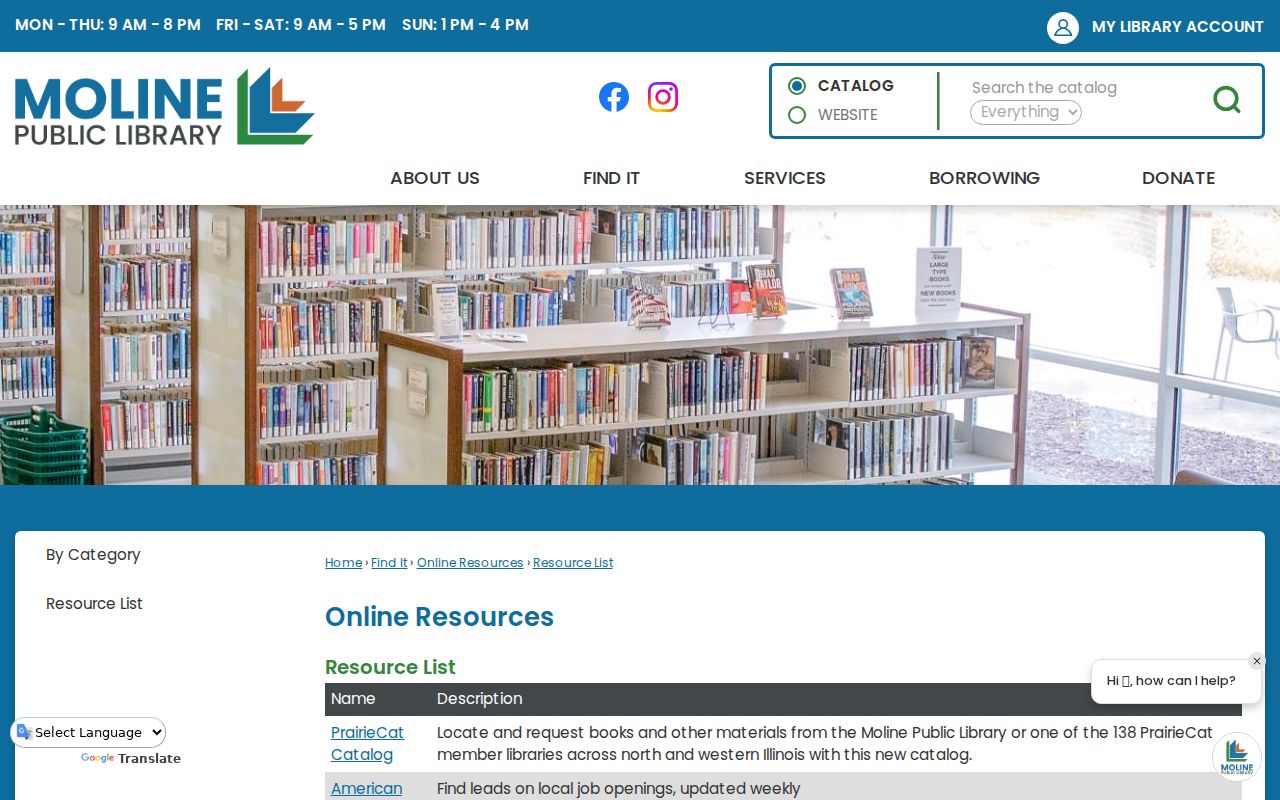
Use its linked newspaper and yearbook collections to test names found in a directory entry.
Moline Directory Building Clues
A library reference example for 1899–1900 shows why a Moline city directory can help even when no person's name is known. The cited snippets point to a business at 1417–1419 5th Avenue and a building entry at 415 15th Street. Those are sample clues, not proof that the whole volume is publicly searchable online.
Start with the building line. Copy the street number, the exact avenue or street form, the business wording, and the page citation. Then look in the name section for the firm or people tied to it. A nearby-year newspaper can reveal an opening, move, sale, or legal notice. The method works well in Moline because the commercial core shifted from the river-and-rail corridor toward 5th Avenue in the 1910s. An address that seems absent may belong to a different downtown phase.
Decode a Moline Directory Entry
Read the volume's own key before expanding any short form. Editors changed conventions, and a mark used by Polk may not mean the same thing in a Holland or Stone volume. Photograph or copy the title page, year, publisher, abbreviation key, entry, and page number together. For an OCR search, check the page image because street digits, initials, and joined letters are common errors.
| Printed name | Surname, first name, initials, and any relationship shown in parentheses |
|---|---|
| Work line | Occupation, firm, or business address only when printed |
| Place line | House number, street spelling, residence, building, or business marker |
| Family notation | Spouse or widow wording that can distinguish same-name people |
| Source control | Volume, year, publisher, page, and the key used to decode it |
- Criss-cross directory
- An address-order section that lets a reader move from a street and number to a listed occupant.
- Householder index
- A list centered on household names, which may omit other people at the same address.
- Abbreviation key
- The volume's own legend for short forms such as residence or widow marks. Save it with the entry.
An entry records what the publisher printed, not a certified fact. A listed person may work at the address, board there, own it, or simply be the named householder. Keep those roles separate until another source confirms them.
Moline Directory Help in Person
When the library route stops, two nearby repositories extend the search. The Rock Island County Historical Society research library at 822 11th Avenue in Moline reports directories within more than 12,000 books and 300 collections. It is open Wednesday through Saturday, 9:00 a.m. to 4:00 p.m.; the listed adult or couple use fee is $5 per day, while members enter free. Call 309-764-8590 or email the research contact before traveling.
Rock Island Public Library's Downtown Historical Room, 401 19th Street in Rock Island, states a city-directory collection from 1855 to the present. Thursday hours are listed as 1:00 to 4:00 p.m., with reference help at 309-732-7341. Its paid research service is listed at $15 per hour with a one-hour minimum, and obituary requests at $5. Verify current terms when ordering.
Moline Public Library
3210 41st Street
309-524-2440
Local history, Dispatch archive, yearbooks, reference help
RICHS Research Library
822 11th Avenue
309-764-8590
Directories, newspapers, maps, census, photos, family files
Rock Island Historical Room
401 19th Street, Rock Island
309-732-7341
County-wide directory and newspaper backup
The RICHS image below confirms the local research-library route. Its broad holdings make it useful when a catalog does not reveal a volume's reverse section or exact Moline coverage.
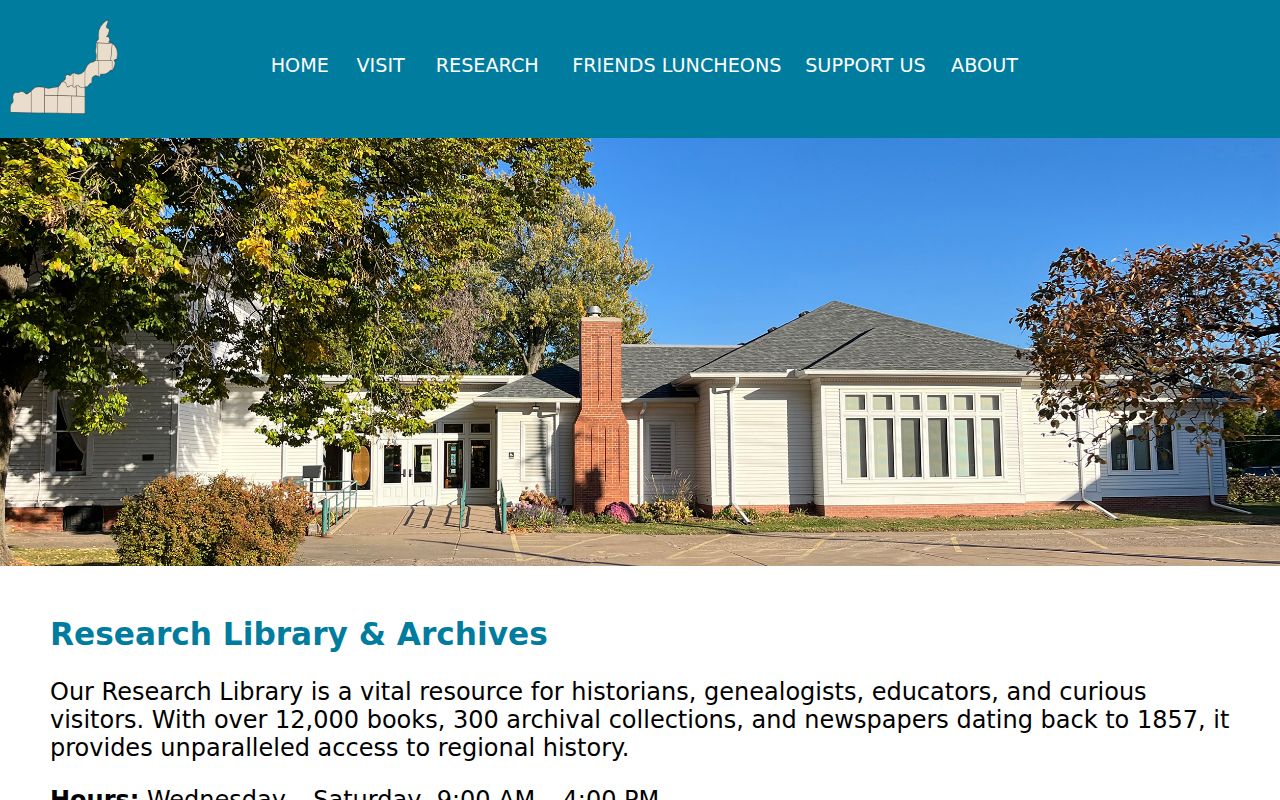
Send a narrow request with the city, year, publisher, name, and address to keep staff research focused.
Moline Directory Gaps in Newspapers
The Moline Dispatch archive is the strongest bridge between printed directory years. The University of Illinois Newspaper Project lists digitized runs in segments from 1895 through 1969, while the library landing page describes broader holdings in 1850–1859 and 1870–1993. Check the collection landing page before making a date-specific claim. OCR can miss names, so search address fragments, firms, and nearby relatives, then read the page image.
RICHS reports county newspapers from 1857 to the present. Rock Island Public Library reports the Argus from 1866 to the present and a limited obituary index. A move notice, obituary, probate notice, business advertisement, or property notice may explain why a name appears in one directory and vanishes from the next.
Moline Directory Trails in Yearbooks
Moline Public Library's resource list states that Moline High School yearbooks span 1913–2022. They are useful for reconnecting with a known classmate or distinguishing people who share a name. Access to individual images may depend on the host interface or account, so treat the library's link as the access point and verify what can be viewed.
A yearbook is not a substitute for a city directory entry. It gives a school-community setting, class year, activities, and a printed name form. Pair it with a newspaper item or later directory only when dates and identity details align. Maiden names, initials, and changed spellings deserve separate searches.
Trace Families in Moline Directories
Build a household timeline instead of copying isolated names. A city directory supplies close street-level detail, while a federal census supplies ages, birthplaces, and relationships at wider intervals. Together they can separate two people with similar initials and show whether an address change reflects a move or a mistaken match.
- Start with a known name, address, and year. Save the exact spelling, city or ward label, page, and whether the line points to a home or business.
- Move backward and forward through located volumes. Note every spouse, widow mark, trade, firm, street change, and nearby household.
- Ask whether that year has a reverse or criss-cross section. Use the address-order entry to test occupancy without assuming ownership.
- Pair a 1900 directory with the 1900 census, a 1910 volume with the 1910 census, and later decades in the same way. Compare age, birthplace, and relatives.
- Close the trail with a Moline newspaper, county genealogy index, cemetery record, probate file, recorded deed, or Sanborn map.
Disappearance has several causes. The person may have moved, died, gone unlisted, changed a printed name, or fallen into a missing volume. Do not pick one explanation without a second source. For modern address-keyed work, the Moline street directory route explains how parcels and deeds answer a different question.
Moline's Verified Directory Timeline
The evidence supports a short milestone list, not a continuous publication history. Keep unknown years marked as unknown.
| Year | Located evidence |
|---|---|
| 1878–1885 | Holland's Rock Island & Moline directories named in the HABS bibliography |
| 1899–1900 | Moline Public Library reference example with building and address entries |
| 1902 | H.N. Stone Moline City Directory named in the bibliography |
| 1909, 1917, 1918 | R.L. Polk Moline directory years specifically identified |
There is no verified first year, last printed year, or full annual run in the reviewed official sources. That restraint is useful: it keeps a shelf gap from becoming a false event in a family timeline.